
Our Philosophy
Why do parents send their children to school? Most would say—to get them educated. But what does education truly mean?
Across cultures and generations, education has been defined in many ways. Some describe it as the process of preparing an individual to contribute meaningfully to society. Others see it as “opening the mind”—broadening perspectives, deepening understanding, and fostering curiosity. In Myanmar, we say “Pyinnya shwe oh, lu ma khwe”—“Education is a pot of gold that cannot be stolen.” In this spirit, educating a child is a lasting investment in both personal fulfillment and social contribution.
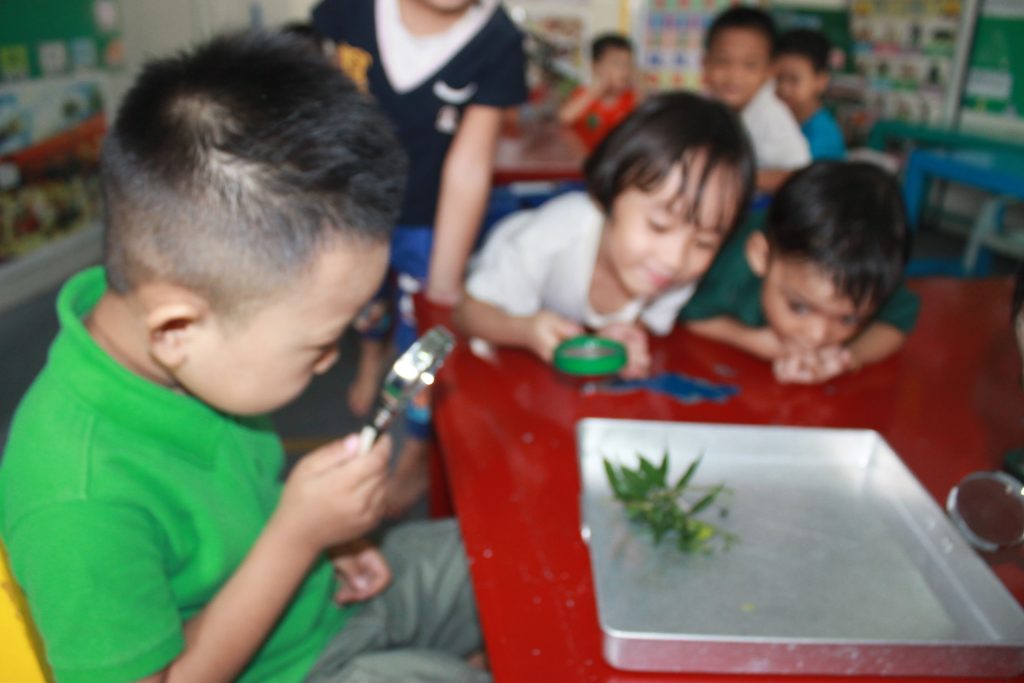
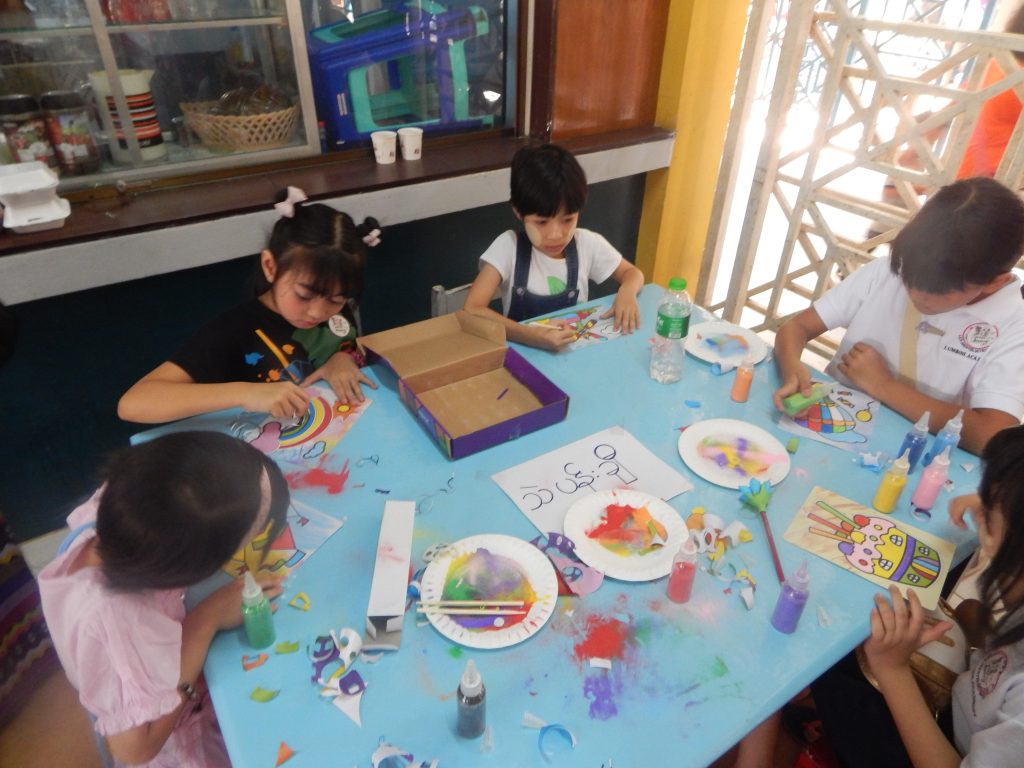
At Lumbini, we believe that education is a lifelong journey, not a one-size-fits-all destination. Every student is unique, with different strengths, needs, and potential. That’s why we draw on the principles of Differentiated Instruction—adapting teaching methods and materials to support diverse learners and nurture the many forms of intelligence each child possesses.
Our classrooms are designed to promote active learning, critical thinking, and creative expression, guided by Bloom’s Taxonomy. We encourage students to progress from foundational knowledge to deeper levels of analysis, evaluation, and original creation.
Inspired by Vygotsky’s Zone of Proximal Development (ZPD), we believe that students learn best when supported just beyond their current abilities—through thoughtful scaffolding, teacher guidance, and peer collaboration. Learning at Lumbini is both personalized and communal.
We also embrace UNESCO’s Four Pillars of Education as the foundation of our educational vision:
Learning to Know – Developing the tools of understanding: inquiry, reasoning, and critical thought
Learning to Do – Applying knowledge in real-life contexts and building practical skills
Learning to Be – Fostering personal growth, values, and a strong sense of identity
Learning to Live Together – Promoting empathy, cooperation, and respect in a diverse world
Beyond academic achievement, we believe education must shape character. A well-educated person is also compassionate, fair, courageous, humble, and patriotic. Our mission is to help students become not only excellent learners, but ethical, empathetic, and confident individuals—ready to thrive in both local and global communities.
Multiple Intelligences: Understanding the Whole Child
We also believe that intelligence is not one-size-fits-all. Modern educational research has identified seven types of intelligence, and being aware of these can help parents and teachers better support each child’s growth.
Verbal–Linguistic Intelligence
The ability to use words effectively in speaking, reading, and writing. This is often seen in writers, poets, speakers, and religious teachers.
Examples: Thakin Kodaw Hmaing, Sayadaw U Nyanissara, Bill Clinton, Tony BlairLogical–Mathematical Intelligence
The capacity to think logically, analyze problems, and understand patterns. Found in scientists, mathematicians, and engineers.
Examples: Isaac Newton, Bill GatesVisual–Spatial Intelligence
The ability to visualize and manipulate objects in the mind. Common in artists, architects, and certain scientists.
Examples: Charles Darwin, Watson & CrickBodily–Kinesthetic Intelligence
Skill in using one’s body to express ideas or perform tasks, especially in sports or physical arts.
Examples: Tiger Woods, David BeckhamMusical Intelligence
Sensitivity to sound, pitch, rhythm, and tone, often found in musicians, composers, and singers.
Examples: Renowned vocalists, composers, and traditional performersInterpersonal Intelligence
The ability to understand and connect with others—social intelligence. Often seen in leaders, businesspeople, and diplomats.
Examples: Successful organizational leaders and statesmenIntrapersonal Intelligence
Deep self-awareness, emotional insight, and the ability to reflect inward. Found in philosophers, spiritual leaders, and visionary thinkers.
Examples: Influential philosophers and thought leaders
At Lumbini, we strive to develop all these aspects of intelligence, ensuring that each student is equipped not only to succeed academically, but also to thrive personally, socially, and morally.
